Stavya R&D Center


Clinical Research & Trials
Our clinical research programs evaluate new treatment approaches, technologies, and rehabilitation protocols designed to improve patient outcomes. Through structured clinical studies and data analysis, we continuously refine spine treatment strategies to deliver safer and more effective care.
- Evidence-based treatment protocols
- Continuous outcome analysis
- Collaboration with medical researchers
- Ethical research practices
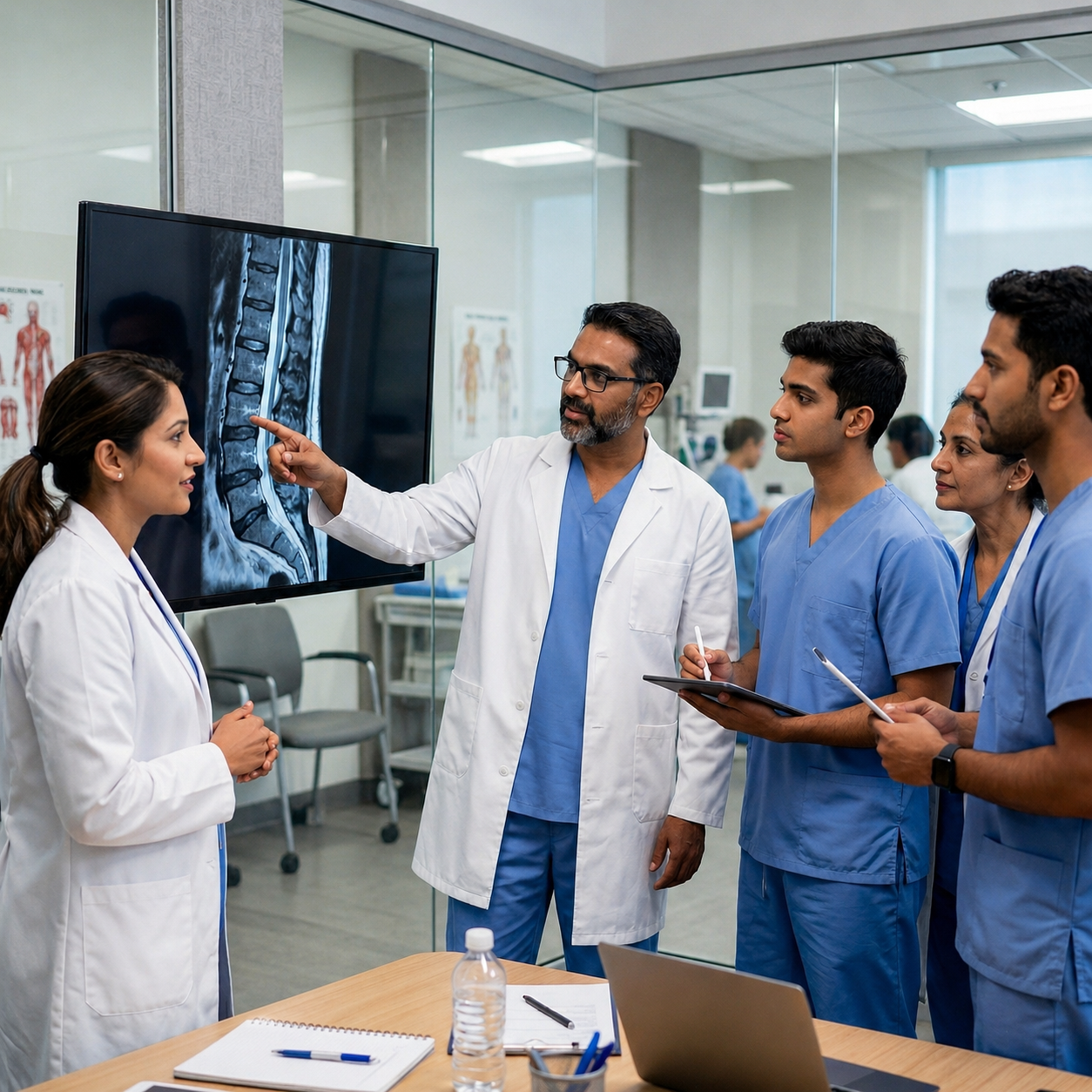
A Culture of Continuous Innovation
Our doctors, researchers, and physiotherapists work together to transform decades of clinical experience into new techniques, data-driven protocols, and evidence-based outcomes. With over 100 publications and ongoing clinical studies in minimally invasive, endoscopic, and robotic spine surgery, Stavya is at the forefront of advancing safe and effective spine care.
We collaborate with leading global spine organizations such as ASSI, NASS, and AOSpine to exchange knowledge, contribute to multicenter research, and train the next generation of specialists. Through regular workshops, fellowships, and academic training programs, we ensure that innovation at Stavya extends beyond technology it becomes a way of thinking, learning, and improving patient outcomes every day.
Research is a part of a growing institution. It involves multitude of steps right from maintaining the data to publication of a paper in national/international journal.
Only few institutes in practice maintain the day-to-day details about the patients visiting to the hospital.
Patients suffering from various spinal ailments are treated conservatively as well as surgically depending upon the symptomatology and findings on different radiological tests.
We at SSHRI record and store all the medical data pertaining to patients visiting to our centre. This medical data is stored in the computers in various sections. This is possible due to dedicated software developed and edited by Stavya consultants.

All the information stored in the computers is analysed by the spinal surgeons and research analysts working in our institute.
Research studies are proposed, planned and executed in a systematic manner. All the proposed research studies are initially planned and discussed among the spine surgeons in the institute. Few studies involve patients clinically, radiological studies which are non-invasive in nature.
Few studies involving newer drugs, newer surgical techniques, newer implants need utmost planning and critical work up before executing. Then in the next stage, Institutional Ethical Committee (IEC) approval is taken for the proposed study. We at SSHRI have an institutional ethical committee since 2009.
Research studies once approved by ethical committee are then executed in proposed ways. Patient consent is taken in all the studies. All the information collected is analysed and then statistically calculated deriving to results.
As a spine surgeon, operating patients is a skilled job, but writing a research paper is a tough job that takes a lot of patience, time and also thinking process.
Submission, Review and finally acceptance – results in a paper publication in reputed national/ international, ortho/ spine journal. We, at SSHRI, have published 16 papers in 2019.
For the benefit of patients, we have uploaded all the published journals of preceding years.
INSTITUTIONAL ETHICS COMMITTEE (SSHRI)
SSHRI has its own institutional ethics committee which supervises all in home funded/nonfunded research project.
Dr. Adarshjit Singh
Chair Person
Dr. Mirant Dave
Clinician
Dr.Ajay Krishnan
Clinician
Dr. Shounak Dhudhiya
Clinician
Dr.Birju K. Vyas
Member Secretary
Mr.Mahesh Vaghasia
Legal Expert
Dr. Falguni Majmudar
Scientific Member
Ms. Renuka Patel
Member
Dr. Stuti Shah
Scientific Member
Clinician
Ms.Jimita Raval
Social Scientist
Ms. Jalpa Vyas
Lay Person
Ms. Rekha Trivedi
Legal Expert
Download EC Re-Registration Certificate
Ethics Committee Registration Division
OUR PUBLICATION
- Reconstruction of iliac crest with rib to prevent donor site complications: A prospective study of 26 cases
- Transpedicular percutaneous biopsy of vertebral body lesions: a series of 71 cases
- Magnetic resonance myelography in early postoperative lumbar discectomy: An efficient and cost effective modality.
- MR-Guided percutaneous cryotherapy of solid renal tumors in seventy-one patients: Our initial experience
- Andersson lesion: are we misdiagnosing it? A retrospective study of clinico-radiological features and outcome of short segment fixation
- Buerger’s Disease (Thromboangiitis Obliterans)- Management by Ilizarov’s Technique of Horizontal Distraction. A Retrospective Study of 60 Cases
- Tuberculosis Spine:Biopsy Techniques
- MRI-guided cryoabaltion of 110 patients with solid renal tumors
- Pictorial assay on MR guided cryoablation
- Coexisting lumbar and cervical stenosis (tandem spinal stenosis): an infrequent presentation. Retrospective analysis of single-stage surgery (53 cases)
- Disseminated nocardiosis: A rare presentation with surgical emergency
- Outcome of percutaneous continuous drainage of psoas abscess: A clinically guided technique
- Surgical Evaluation of Transforaminal Lumbar Interbody Fusion and Posterior Instrumentation in Degenerative Lumbar Spine
- Two-Stage Surgical Management Of Multilevel Symptomatic Thoracic Haemangioma Using Ethanol and Iliac Crest Bone Graft
- An observational study to assess back pain in patients with severe osteoporosis treated with teriparatide versus antiresorptives
- Coexistence of tuberculosis and myeloma causing atlanto-axial instability
- A rare case of spontaneous pseudomeningocele with lytic spondylolisthesis
- Does the Surgical timing and Decompression alone or fusion surgery in lumbar stenosis influence outcome in Cauda Equina Syndrome?
- Percutaneous transforaminal endoscopic decompression and cageless percutaneous bone graft transforaminal lumbar interbody fusion: A feasibility study
- Percutaneous transforaminal endoscopic discectomy and drainage for spondylodiscitis: A technical note and review of literature
- Risk Factors and Surgical Treatment for Recurrent Lumbar Disc Prolapse: A Review of the Literature
- Socioeconomic impact of cervical spinal cord injury operated in patients with lower income group
- A clinical and radiological study of nontraumatic coccygodynia in Indian population
- A novel surgical technique for hydatid cyst involving cervicothoracic anterior epidural space
- A Rare case of giant cell tumor of body of Axis: Surgical management with staged posterior occipitocervical fusion,Anterior excision and Reconstruction through anterior madibulotomy
- An Unconventional and Novel Therapeutic techniques of Anterior indirect decompression in a case of C6-C7 synovial cyst associated with Radiculopathy
- Concomitant noncontiguous level (thoracic & lumbar) spinal stenosis
- The Effectiveness and safety of Ultrasonic bone scalpel versus conventional method in cervical laminectomy: A retrospective study of 311 patients
- The Relationship of Facet Joint Orientation and Tropism with Lumbar Disc Herniation and Degenerative Spondylolisthesis in the Lower Lumbar Spine
- Trans-foraminal endoscopic uniportal decompression in degenerative lumbar spondylolisthesis: a technical and case report
- Transforaminal Thoracic Interbody Fusion for Thoracic Disc Prolapse: Surgicoradiological Analysis of 18 Cases
- Ultrasonic bone scalpel : utility in cervical corpectomy. A technical note
- 01: Randomized controlled trial assessing the effect of patient education on postoperative opioid consumption after prolapse surgery
- Cauda Equina Syndrome: A Review of 15 Patients Who Underwent Percutaneous Transforaminal Endoscopic Lumbar Discectomy (PTELD) Under Local Anaesthesia
- Inter-relation of Hypocalcemia with Established Osteoporosis and DXA Analysis – A Prospective Study of 100 Indian Subject
- Percutaneous Transforaminal Endoscopic Decompression in Lumbar Discal Cyst
- Symptomatic pneumocephalus following spine surgery: An institutional experience and review of literature
- The Effect of Head Loading on Cervical Spine in Manual Laborers
- Strategies of Avoiding Medicolegal Problems
- Risk Factors and Surgical Treatment for Recurrent Lumbar Disc Prolapse: A Review of the Literature
- A Rare Case of Spontaneous Pseudomeningocele with Lytic Spondylolisthesis
- A novel technique for the management of Atlantoaxial osteoarthritis
- Drain Tip Culture: Would It Help Us Predict and Prevent Surgical Site Infection After Spinal Surgery?
- Expanded Indication of Full Endoscopic Spine Sugery
- Hemodynamic Neuromonitoring, a Proposed Spino-Cardiac Protective Reflex: Prospective Study in 200 Patients of Lumbar Surgery
- Thoracic Spine Stenosis: Does Ultrasonic Osteotome Improve Outcome in Comparison to Conventional Technique?
- Imaging in Thoracic Disc Prolapse – A Study of 25 Patients and Review of the Literature
- A Case of C 3 Aneurysmal Bone Cyst Managed by Staged Surgery
- Results of in situ fixation of Andersson lesion by posterior approach in 35 cases
- Congenital agenesis of lumbo-sacral pedicles with associated anomalies: case report with an emphasis on the use of O-arm, navigation in the management with literature review
- Does conventional open TLIF cause more muscle injury when compared to minimally invasive TILF? – A prospective single centre analysis
- End-points of Decompression of in Lumbar Transforaminal Endoscopic Spine Surgery: A Narrative Review of Objective and Subjective Criteria to Prevent Failures
- Gorham-stout disease: A multi-rod lumbar reconstruction with off label suppression-remission therapy
- Transpedicular vertebral biopsy under O-arm navigation: a technical note
- Traumatic cervical spine injury: Clinical scenarios
- A Prospective Study to Find Out the Association between Supine Lying Low Back Pain and Retrolisthesis
- Integrated Operation Theater Spine Suite (IOTSS) History of Spine Surgery: Lord Krishna the First Eternal Spine Surgeon
- A prospective study on use of Ilizarov external fixator for open fractures of Tibia
- A comparative morphometric analysis of operative windows for performing OLIF among normal and deformity group in lower lumbar spine
- An Academic Clinical Study to Assess the Efficacy and Safety of Nandrolone Decanoate and Alendronate Compared with Alendronate Alone in Patients with Osteoporosis
- Does MR Signal Intensity Change have Prognostic Value in Multilevel Cervical Myelopathy? A Single-Center,Prospective Study
- Long-term functional and radiological outcomes of cervical disc arthroplasty at a tertiary level spine center in India: A retrospective cohort analysis with minimum 2 years of follow-up
- Postoperative Lumbar Spondylodiscitis Following Transforaminal Endoscopy and Outcomes of Transforaminal Lumbar Interbody Fusion
- A Rare Case of Posterior Spinal Cord Syndrome Following Commando Surgery: A Case Report and Review of Literature
- Prodrome to Seizure in Transforaminal Endoscopic Surgery: A Series of 9 Cases
- Presumptive Long Rod Technique (PLRT) for Revision Extension Instrumented Spine Surgery: A Technical Note
- Gorham Stout Disease- A Rare Disorder with Ambiguous Recommendations: A Systematic Review of literature
- should 3D navigation be the standard of care for MIS TLIF?
- O ARM navigation guided single position OLIF & percutaneous pedicle fixation
- SPECTRUM OF ORGANISM IN POST-OPERATIVE SPONDYLODISCITIS FOLLOWING PERCUTANEOUS TRANSFORAMINAL ENDOSCOPIC LUMBAR DISCECTOMY: A SERIES OF 19 PATIENTS.
- Complication that resulted in a change in my practice: case scenarios
- Comparative Study on Accuracy of Intra-Operative Computed Tomography-Navigation Based Pedicle Screw Placement With Skin vs Bone Fixed Dynamic Reference Frame in Minimally Invasive Transforaminal Lumbar Interbody Fusion
- Early Intervention in Post-operative Infectious Spondylodiscitis: Outcome of Aggressive Transforaminal Lumbar Interbody Fusion
- Radiographic Assessment and Clinical Outcomes of Conservative Management in Atlanto-Axial Osteoarthritis:A Study of 108 Patients
- Rare indication of atlantoaxial fysion failed conservative management of primary Atlantoaxial osteoarthritis
- Utility of cervical dynamic magnetic resonance imaging for evaluating patients with cervical myelopathy: a retrospective study
- Does Conventional Open TLIF cause more Muscle Injury when Compared to Minimally Invasive TLIF?—A Prospective Single Center Analysis
- Comparative Study on Accuracy of Intra-Operative Computed Tomography-Navigation Based Pedicle Screw Placement With Skin vs Bone Fixed Dynamic Reference Frame in Minimally Invasive Transforaminal Lumbar Interbody Fusion
- A Narrative Review on Pedicle Screw Instrumentation in the Lumbar Spine
- The Technique of a Modified Ponte Osteotomy Using Ultrasonic Bone Scalpel in Spinal Deformity Correction: Does It Save Time and Reduce Blood Loss?
- A 2-Year Outcomes and Complications of Various Techniques of Lumbar Discectomy: A Multicentric Prospective Study
- A new classification system for reporting complications of percutaneous transforaminal endoscopic lumbar decompression
- Investigating the Role of Nandrolone Decanoate in the Management of Osteosarcopenia in Postmenopausal Women: A Prospective Observational Study
- Sarcopenia and Osteoporosis: Two Sides of the Same Coin
- A prospective study of 3D navigation-guided single-position- OLIF with posterior percutaneus fixation
- Redifining the cervical pedicle entry point (CPEP) in the insertion of cervical pedicle screw using O-arm navigation: a prospective radiological study from india
- Normative Values for Spinopelvic Sagittal Parameters in the Asymptomatic Indian Population
- MISSABCON 2024-Marvels of Spine Surgery: Technology and Techniques
- Prospective Analysis of Day-One Postoperative MRI Following Cervical Decompression for Cervical Myelopathy: Insights into Residual Compression and Signal Changes
- Contrast-Enhanced Magnetic Resonance Imaging (MRI) as a Prognosticator for the Conservative Treatment of Lumbar Disc Prolapse: A Prospective Observational Study
- Exploring Fully Navigated Minimally Invasive Spine Surgery-Transforaminal Lumbar Interbody Fusion (MISS-TLIF): An Institutional Analysis
- Missed for Years, Cured in Hours: Surgical Excision of a Popliteal Schwannoma With Intraoperative Neuromonitoring
- Tumor Disarmed: A Strategic Approach to Cervical Osteoblastoma Near Vital Vessels in a Young Patient
- Implications of Tomophobia and Tomophilia for Clinical Practice: Understanding Patient Attitudes Toward Spine Surgery
- Detection of Modern Spinal Implants by Handheld Metal Detectors: A Prospective Observational Study
- Transforaminal Endoscopic Lumbar Discectomy for Migrated Disc Prolapse: A Retrospective Study of 169 Patients
- The Transiliac Approach: A Forgotten Alternative for Transforaminal Endoscopic Decompression at the L5-S1 Level in Patients With High Iliac Crests
- Etiologies and Outcomes in Revision Lumbar Surgery: A Single-Center Cohort Study of Patients Undergoing Two or More Revisions
- Restoration of Sagittal Alignment as a Key Factor in Degenerative Spine Surgery: A Comparative Analysis of Outcomes in Postoperative Balanced and Imbalanced Cases
- A Retrospective Analysis of Demographic, Clinical, and Postoperative Data of All Cervical Spine Surgeries Performed at a Spine Center: Our Experience of 18 Years
- Literature Review: Management of Primary Atlantoaxial Osteoarthritis and Associated Occipital Neuralgia
- En Bloc Spondylectomy for T11 Metastasis of Nasal Adenocarcinoma: A Case Report
- A Prospective Clinical and Radiological Study of Symptomatic Upper Lumbar Disc Herniation in the Indian Population
- A Five-Year Comparative Effectiveness Analysis of Anterior Cervical Discectomy and Fusion Versus Cervical Total Disc Replacement: A Retrospective Multiparametric Evaluation of Clinical, Radiological, and Quality of Life Outcomes
- Prolonged Negative Suction Drainage for Managing Iatrogenic Anterior Cervical Dural Tears
- Diagnostic Value of Stress Magnetic Resonance Imaging in Lumbar Canal Stenosis in Patients with Clinico-radiological Mismatch
- Exoscope and New Avenues in Spine Surgery
- The Role of Enabling Technologies in Spine Surgery in India: Expert Consensus Based on Narrative Review
- A Prospective Observational Cohort Study to Analyze the Etiology of Revision Lumbar Spine Surgery at a Tertiary Care Spine Institute
- Aesthetic-Cosmetic Concern and Its Importance: A Questionnaire-Based Comparative Study of Posterior-Midline and Postero-Lateral Scars in Lower Back Surgery
- Frequency of Classical Hand Signs in Cervical Spondylotic Myelopathy: A Prospective CrossSectional Observational Study
- A Retrospective Analysis of Guidewireless Versus Guidewire-Assisted Navigated Percutaneous Pedicle Screw Placement for Minimally Invasive Spine Surgery at a Tertiary Care Institute
- Ventral Spinal Cord Displacement After SingleLevel Anterior Cervical Corpectomy: A Case Report
- Accuracy Assessment of Planned Versus Actual Trajectories in Robotic-Assisted Spine Surgery Utilizing Perioperative O-Arm CT Scans
- A Prospective Observational Cohort Study to Analyze the Etiology of Revision Lumbar Spine Surgery at a Tertiary Care Spine Institute
- Multiple Rod Construct for Occipito-Cervical Fusion: Overcoming Challenges With Enabling Technologies
- Evaluation of Clinical Outcomes of Laminectomy Versus Laminoplasty in Patients With Intradural Spinal Tumors: A Retrospective Observational Study
- Early Postoperative Infections of the Sub-Axial Cervical Spine: A Case Series and a Review of Literature
- A prospective multicentric trial on accuracy, efficiency, safety, and outcomes of robot-assisted thoracic pedicle screw fixation
- Radiological and Clinical Outcomes of Cervical Corpectomy Using an Ultrasonic Bone Scalpel
1. Completed Studies
a. Investigator initiated studies
- The Effect of Sciatic nerve mobilization in patients operated Lumbar (L4 L5 S1) Discectomy.
- Clinico-radiological correlation of various fusion techniques for single level lumbar spine disorder
- A retrospective study of comparison of clinical outcome of TLIF and laminectomy in patients presenting with cauda equine syndrome with prospective study of clinical outcome of TLIF in patients with cauda equine syndrome.
- A Comparison of the efficacy and tolerability of Lornoxicam and Diclofenac Sodium in patients with acute post operative pain after Spinal Surgery
- Contrast MRI as a Prognosticator for conservative treatment if Lumbar Disc Prolapse
- Clinico radiological correlation with effectiveness of various treatments in patients with coccycodynia and comparison of radiological assessment of coccyx in normal healthy volunteers.
- A prospective , cross sectional study to find out correlation between Supine Lying LBP/Leg Pain and Retrolisthesis in Lumbar disc prolapse patient
- To Study the effect of neual mamipulation on Haemodynamic parameters during Lumbar spine surgery in Prone position.
- A Radiological study of pedicle dimensional variations in Lytic listhesis in Indian population.
- The Relationship of Osteoporosis with Hypocalcemia
- A prospective analysis of MRI of fibrosis in post – operative TLIF patients conventional vs MISS
- Clinico-radiological results of anterior surgery for multilevel cervical spondylotic myelopathy
- Importance of immediate Post Operative MRI in Cervical and dorsal myelopathy
- Role of contrast MRI in assessment of natural history of lumbar disc prolapse
- Evaluation of new onset pain and neurological deficit in post-op lumbar spine surgery
- A Retrospective analysis of Clinical and Radiological outcome in Recurrent Disc prolapse
- Study of Spinal Sagittal Balance in Indian population along with social and economic perspective
- Drain tip culture: would it help us predict and prevent surgical site infection after spinal surgery?
- Microbiological spectrum in Post procedural Spondylodiscitis
- An academic clinical study to assess the efficacy and safety of Nandrolone decanoate and alendronate as compared to alendronate alone in patients with Osteoporosis
- An Observational retrospective & prospective analysis of use, advantages, disadvantages & significance of intraoperative neu-romonitoring in spine surgeries.
- An Investigator Initiated study of Redefining the entry point in insertion of cervical pedicle screw using O-arm and Navigation – A prospective radiological study in Indian subjects
- "Comparative morphometric analysis of bare window in oblique lumbar interbody fusion indegenerative lumbar scoliosis. "
- A prospective multicentric questionnaire-based evaluation of learning curve of first seven consecutive cases of OLIF of a surgeon/institute.
- A prospective clinical and radiological study of symptomatic upper lumbar disc herniation in Indian population
- Surgical outcomes of upper lumbar disc herniation in Indian population- A prospective analysis.
- Retrospective analysis of clinical presentation and surgical outcomes of upper lumbar disc herniation.
- Signs of Transforaminal Endoscopic End-Point Decompression: Objective and Subjective evaluation to prevent failures.
- TranspedicularVertebral biopsy: Navigated Biopsy technique Improvisation with Integrated Operation Theater Spine Suite (IOTSS)
- A retrospective analysis of demographic, clinical and postoperative data of all patients operated at a spine center- Our experience of 18 years
- A retrospective analysis of demographic, clinical and postoperative data of all cervical spine patients operated at a spine center – Our experience of 18 years
- Retrospective long term follow-up analysis of anterior cervical corpectomy and fusion in cervical myelopathy at tertiary level spine center in India.
- Long term clinical and radiological outcomes ofcervical disc arthroplasty at a tertiary level spine center: A retrospective cohort analysis
- Occipitocervical fusion using screw rod plate system in craniocervical pathologies: A prospective cohort analysis of long term functional and radiological outcome with minimum 2 years of follow-up.
- Kinematic Cervical MRI – An insight into indications and radiological findings – A retrospective radiological analysis
- A Retrospective study to find the diagnostic value of stress MRI in management of lumbar spine pathologies with clinical-radiological mismatch
- Prospective analysis of immediate post operative MRI in patients with myelopathy
- Retrospective analysis of immediate post operative MRI in patients with myelopathy
- Comparative study on accuracy of Intraoperative CT-navigation based Screw placement with cutaneous vs bone fixed dynamic reference frame in MIS-TLIF
- An analysis of reasons for delay in seeking treatment among patients with neurological deficits
- The Twenty – twenty view: a novel technique to assess accuracy of pedicle screw instru- mentation
- Procrastinating drain removal”: unconventional but effective management of cerebrospinal fluid leakage following anterior cervical spine surgery: a single center – single surgeon study.
- A Exploratory Study and Analysis of Real Word Evidence of Adaptix™ Interbody Cage System at a Tertiary Care Spine Centre.
- Prospective comparative analysis of guidewire Vs guide wirelessnavigated percutaneous pedicle screw placement for MISS
- An observational, retrospective & prospective study to evaluate the treatment outcomes of atlantoaxial osteoarthritis
- A comparative study between vertical and horizontal MISS (Minimally invasive spine surgery) post-operative scar
- To Study the prevalence of hand signs in cervical spondylotic myelopthy: A prospective cohort analysis.
- The use of chewing gum to enhance recovery of bowel function after Spine surgery: A randomised controlled trial
- Detection of Modern Spinal Implants by Handheld Metal Detectors
- Multiple-Rod Construct for Occipito-Cervical Fusion: A Retrospective observational study
- Spinoxiety: Understanding the Influence of Anxiety on Clinical Perception and Outcomes in Spine Disorders—A Prospective Observational Study
- Accuracy Assessment of Planned vs. Actual Trajectories in Robotic Spine Surgery Using Post-Operative CT scans
- A Five-Year Comparative Effectiveness Analysis of Anterior Cervical Discectomy and Fusion Versus Cervical Total Disc Replacement.
- Determinants Of Adherence to Osteoporosis Treatment in Our Institute.
- Surgical Fear and Preference in Spine Disorders: A Prospective Study of Tomophobia and Tomophilia
- Evaluation of Clinical Outcomes of Preserving Versus Sacrificing C2 and C7 Spinous Process Attachments in Patients Undergoing Cervical Laminectomy: A retrospective observational study
- Assessment of Clinical and Ethical Practices in Spine Consultation Across India: A Patient-Based Observational Study
- Institutional analysis: Post‑COVID Health Pursuit by Physical Exercise Leading to an Enhanced Spine Problem in All Cross‑Sectional Age Groups
- Evaluation of Clinical Outcomes of Laminectomy versus Laminoplasty in Patients with Intradural Spinal Tumors: A retrospective observational study
- EPJF: Endplate Junctional Failure in Lumbar Disc herniation: Transforaminal Endoscopic Management in 113 patients
- Transforaminal Lumbar Endoscopic Discectomy/ Decompression at last lumbo-sacral level by transiliac approach.
- Transforaminal Lumbar Endoscopic Discectomy in Obese patients.
- Fully 3D CT Navigated, TLIF Outcome & Workflow advantage: A study of 44 cases.
- A Retrospective analysis of outcomes in multiple revision surgeries in lumbar spine.
- A Prospective Observational Cohort Study to Analyze the Etiology of Revision Lumbar Spine Surgeryat a Tertiary Care Spine Institute with 6 months follow-up.
- A Prospective Observational Cohort Study to Analyse the Etiology of Revision Lumbar Spine Surgery at a Tertiary Care Spine Institute.
- Transforaminal Lumbar Endoscopic Discectomy in Migrated Disc Prolapse (DP): A Study Of 169 Patients
- An Investigator Initiated study of O-Arm guided single position OLIF with posterior percutaneous fixation in the same position for Indian patients.
- An Investigator Initiated study of Micro structural and DEXA analysis of trabecular architecture in lumbar vertebra – a comparative study in osteoporotic and normal vertebrae among Indian population.
b. Sponsored Studies
- A Randomized, Double-Blind, Active-Controlled, Parallel Arm, Multicenter Study Comparing Pharmacokinetics, Pharmacodynamics, and Immunogenicity of Denosumab of Intas Pharmaceutical Limited (60 mg/mL) with Prolia® in Postmenopausal Women with Osteoporosis.
- An Open-label, Single-arm, Multicenter Phase 4 Study to Evaluate Safety and Tolerability of Romosozumab (EVENITY®) in Postmenopausal Women in India with Osteoporosis and a High Risk of Fracture (Romosozumab).
- A prospective single arm, multi-centric, post marketing clinical follow-up study to evaluate the safety and performance of pedicle screws in patient with spinal disorders
- Medication Use Patterns, Treatment Satisfaction and Inadequate Control of Osteoporosis Study(MUSIC-OS):an Asia Pacific study of postmenopausal women treated for osteoporosis in clinical practice
- A Multicentric , Randomized, Open –Label, Comparative, Prospective, Clinical trial to Investigate Efficacy and Safety of Diclofenac Sodium I.V. Injection (75mg/2ml)versus Diclofenac Sodium I.M.Injection (75 mg/ 3 ml ) (Voveran (75mg/3ml) for patients with (A) acute post operative pain and (B)Acute Renal Colic
2. Ongoing Studies :
a. Investigator initiated studies
- Early Postoperative Recovery and Discharge Patterns Following MIS TLIF in a High-Volume Spine Center.
- Clinical Outcomes of MIS TLIF in a High-Volume Spine Center (2022–2025).
- Impact of Intraoperative 3D Navigation versus Conventional Fluoroscopy on Clinical, Radiographic and Operational Outcomes in Minimally Invasive Transforaminal Lumbar Interbody Fusion (MIS TLIF).
- Robotic versus Conventional Fluoroscopy-Guided Pedicle Screw Placement in Minimally Invasive Transforaminal Lumbar Interbody Fusion (MIS TLIF): A Comparative Study of Accuracy, Radiation, and Clinical Outcomes.
- Comparative Use of Navigation and Robotics in MIS TLIF: Workflow and Early Outcomes.
- Learning Curve of MIS TLIF in a High-Volume Spine Practice.
- Cost Analysis of MIS TLIF: Impact of Implant Choice and Technology Use in an Indian Setting
- Cervico-dorso-lumbar stenosis (Multiregional spinal stenosis – MRSS) – An Experience of Single Stage Surgery in a Series of 28 Patients with a minimum follow-up of 2 years.
- Prospective Comparative Study Evaluating Prophylactic Local Antibiotic Calcium Sulfate Beads [Stimulan] Versus Standard Systemic Antibiotic Prophylaxis in Preventing Surgical Site Infection in Spine Surgeries
- Facet Asymmetry and tropism in primary atlantoaxial osteoarthritis: a case-control study.
- A prospective evaluation of etiology of supine lying back pain.
- To study the Clinical Outcomes of Vacuum IFT, Cryotherapy, TECARor Laser Therapy Combinations on Patients with Spinal Ailments.
- Outcome of planned durectomy in thoracic Ossified ligamentum flavum -A Retrospective Observational study
- Does Preservation of C2 and C7 Spinous Process Attachments Improve Patient Outcomes in Cervical Laminectomy? A Prospective Observational Study
- Does preoperative sarcopenia (based on paraspinal muscle cross-sectional area on MRI) predict achievement of the minimum clinically important difference (MCID) in Oswestry Disability Index (ODI) at 6 months after MIS-TLIF?
- Understanding the Psychological Intent and Motivation of National and International Professionals to a Spine Speciality Hospital
- Outcome of Percutaneous Navigation-Guided Posterior Iliac Crest Bone Graft Harvesting: In Primary and Revision Minimally Invasive lumbar Interbody fusion
- EXPECTORA: A Prospective Observational Study of Expectation-Driven Phenomena in Patients with Spine Disorders
- Association of Type 2 Diabetes Mellitus with Vertebral Fractures, Degenerative Spine Disease and Osteoporosis in Adults Aged ≥40 Years: A Prospective Investigator-Initiated Cohort Study
- Quantitative MRI assessment of lumbar dural sac area following minimally invasive transforaminal lumbar interbody fusion: a retrospective single-center study
- Extubation-to-Mobilisation Interval in Major Spine Surgery: A Prospective Study
- Evaluation of Clinical and Radiological Outcomes of Anterior Cervical Hybrid Surgery.
- Prospective evaluation of spinal canal remodeling and clinical recovery after MIS-TLIF and open TLIF: Correlation of clinical and functional outcome with improvement in spinal canal diameter
- Prospective Evaluation of Indirect Decompression After MIS-TLIF: Correlation of Radiological and Clinical Outcomes
- To evaluate the effectiveness of conservative treatment in patients with lumbar disc prolapse
- The Role of Oblique Lateral Radiographs and Oblique Sagittal MRI in Diagnosing Cervical Radiculopathy and Myeloradiculopathy: A Correlative Analysis
b. Sponsored studies
- A Prospective, Single Arm, Post Market Clinical Follow-up (PMCF) study to Evaluate the Safety and Performance of Cervical System
LATEST PUBLICATIONS
European Spine Journal
-
Age- and sex-related changes in facet orientation and tropism in lower lumbar spine: an MRI study of 600 patients. Degulmadi D, Dave BR, Krishnan A. Eur Spine J. 2019 May; 28(5):961-966. DOI: 10.1007/s00586-019-05953-y.
-
Ultrasonic bone scalpel: utility in cervical corpectomy. A technical note. Dave BR, Degulmadi D, Dahibhate S, Krishnan A, Patel D. Eur Spine J. 2019 Feb;28(2):380-385. DOI: 10.1007/s00586-018-5536-x
Indian spine journal
- A novel surgical technique for hydatid cyst involving cervico-thoracic anterior epidural space. Bharat R Dave, Degulmadi Devanand, Ganesh Deshmukh. Indian spine journal. 2019; vol 2(1), 99-101. DOI: 10.4103/isj.isj_17_18
- A Rare Case of Giant Cell Tumor of Body of Axis: Surgical Management with Staged Posterior Occipito-cervical Fusion, Anterior Excision, and Reconstruction through Anterior Mandibulotomy. Bharat R. Dave, Gayadhar Behera, Ajay Krishnan, Devanand Degulmadi. Indian spine journal 2019;2: 179-83. DOI: 10.4103/isj.isj_21_19
- An Unconventional and Novel Therapeutic Technique of Anterior Indirect Decompression in a Case of C6–C7 Synovial Cyst Associated with Radiculopathy. Bharat R. Dave, Gayadhar Behera, Yash Shah, Ajay Krishnan. Indian Spine J 2019;2:190-4. DOI: 10.4103/isj.isj_9_19
- A Clinical and Radiological Study of Non-traumatic Coccygodynia in Indian Population. Bharat R. Dave, Paresh B. Bang, Devanand Degulmadi, Pushpak Samel, Deepak Shah, Ajay Krishnan. Indian Spine J 2019;2:128-33. DOI: 10.4103/isj.isj_15_18
- Symptomatic Pneumocephalus Following Spine Surgery – an institutional experience and review of literature’. Bharat R. Dave, Amit Jain, Devanand Degulmadi, Ajay Kirshnan, Paresh Bang.
Indian Spine J 2020
DOI: 10.4103/isj.isj_4_19
- A Rare Case of Spontaneous Pseudomeningocele with lytic Spondylolisthesis. Bharat R. Dave, Devanand Degulmadi, Ajay Kirshnan, Paresh Bang.
Indian Spine J 2020
DOI: 10.4103/isj.isj_20_19
Global Spine Journal
-
The Effectiveness and Safety of Ultrasonic Bone Scalpel Versus Conventional Method in Cervical Laminectomy: A Retrospective Study of 311 Patients Bharat R. Dave, MS, MCh1, Ajay Krishnan, MS1 , Ravi Ranjan Rai, MS1 , DevanandDegulmadi, MS1, ShivanandMayi, MS1, and MahendraGudhe, MS1 Global Spine Journal 1-7.
-
Transforaminal Thoracic Interbody Fusion for Thoracic Disc Prolapse: Surgico-radiological Analysis of 18 Cases. Ajay Krishnan, MS, D Devanand, MS, Shivanand Mayi, MS, Mahesh Kulkarni, MS, Chaitanya Reddy MS, Mreetunjay Singh, MS, Ravi Ranjan Rai, MS, Bharat R. Dave, MS. Global spine journal 1-9,2019. DOI:10.1177/2192568219870459
Asian Spine Journal
-
Does the Surgical Timing and Decompression Alone or Fusion Surgery in Lumbar Stenosis Influence Outcome in Cauda Equina Syndrome? Dave BR, Samal P, Sangvi R, Degulmadi D, Patel D, Krishnan A. Asian Spine J. 2019 Apr;13(2):198-209. DOI: 10.31616/asj.2018.0168
-
The Relationship of Facet Joint Orientation and Tropism with Lumbar Disc Herniation and Degenerative Spondylolisthesis in the Lower Lumbar Spine. Degulmadi D, Dave B, Krishnan A, Patel D. Asian Spine J. 2019 Feb;13(1):22-28. DOI: 10.31616/asj.2018.0116
-
Risk factors and surgical treatment for recurrent lumbar disc prolapse – a review of literature.Ajay Krishnan, Mahesh Kulkarni, Mreetaunjay Singh, Chaitanya Reddy, Shivanand Mayi, D. Devanand, Ravi Ranjan Rai, Bharat R. Dave. Asian spine journal 2019;asj.2018.0301., October 15, 2019
LATEST PUBLICATIONS
International Orthopaedics
- Concomitant Noncontiguous Level (Thoracic & Lumbar) Spinal stenosis in International Orthopaedics-International Ortho.2009,Apr, 33(2):483-8

International journal of current research
- Coexistence of tuberculosis and myeloma causing atlanto-axial instability. Dr. Bharat R Dave, Dr.PuspakSamal, Dr.Devanand. D, Dr Denish patel, Dr. Ankur Patel, Dr. Manish P Barot and Dr. Ajay Krishnan. International journal of current research. Vol. 9, issue, 09, pp.57670-57673, September, 2017
Asian spine journal
- Two stage surgical management of multilevel symptomatic thoracic haemangioma using ethanol and iliac crest bone graft. Asian spine journal. 2014. Aug; 8(4): 502–505.

NCBI
- Transpedicular percutaneous biopsy of vertebral body lesions: a series of 71 cases-NCBI- Spinal cord-2009-47,384-389.

Indian journal of endocrinology
- An observational study to assess back pain in patients with severe osteoporosis treated with teriparatide versus antiresorptives: An Indian subpopulation analysis, Harvinder Chhabra,Rajesh Malhotra, Sunil Marwah,Bharat Dave,KyoungahSee,SimratSohal and SirelGurbuz, Indian J Endocrinol Metab. 2015 Jul-Aug; 19(4): 483–490.
European Spine Journal
-
Andersson lesion: are we misdiagnosing it? A retrospective study of clinico-radiological features and outcome of short segment fixation. Bharat R. Dave, Himanshu Ram, Ajay Krishnan. Eur Spine J (2011) 20:1503–1509. Doi 10.1007/s00586-011-1836-0.
-
Coexisting lumbar and cervical stenosis (tandem spinal stenosis): an infrequent presentation. Retrospective analysis of single-stage surgery (53 cases), Ajay Krishnan, Bharat R. Dave, Arun Kumar Kambar, and Himanshu Ram. Eur Spine J. 2014 Jan; 23(1): 64–73. Published online 2013 Jun 24. doi: 10.1007/s00586-013-2868-4
CHAPTER IN BOOKS
1. In ASSI texbook chapter written on the transpedicular biopsy techniques.
2. In Paediatric Bone and Joint Infection Chapter written on Spondylo discitis
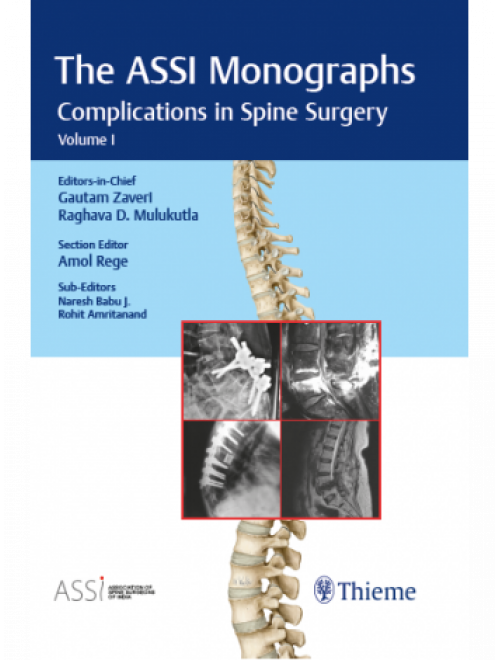
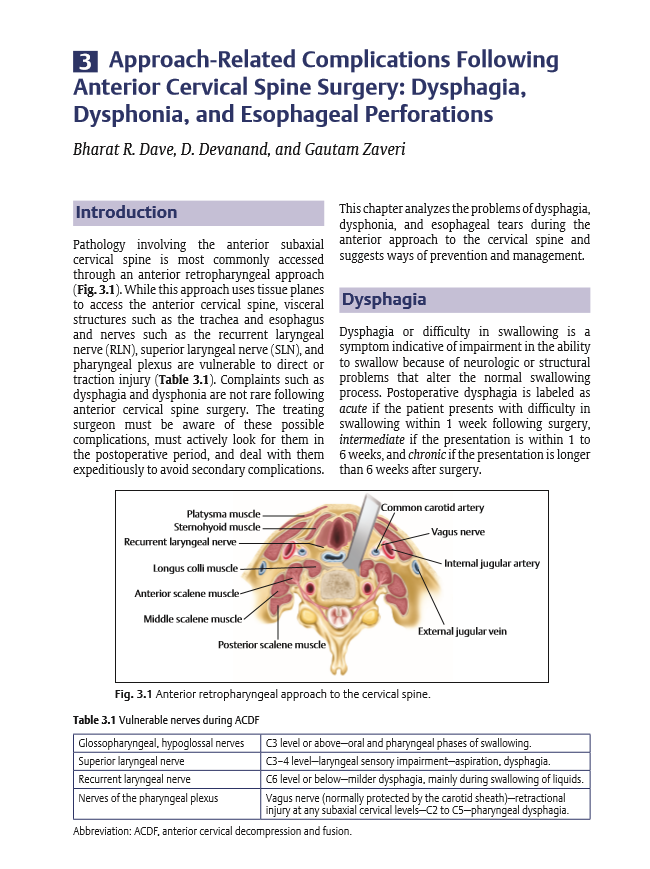
3. Approach-Related Complications Following Anterior Cervical Spine Surgery: Dysphagia, Dysphonia, and Esophageal Perforations.
Authors: Bharat R. Dave & D. Devanand